Imola

Edited by:
Massimo Martini
Access
Imola is well connected: the railway station connects it to Bologna and Ravenna, while the motorway provides quick access to the Adriatic coast and neighbouring cities. The nearest airport is Bologna airport.
Introduction
Imola is located in the Emilia-Romagna plain, along the Via Emilia and close to the foothills of the Tuscan-Romagna Apennines. The city, crossed by the Santerno river, is a lively historical and cultural centre, known for its artistic heritage, food and wine, and the motoring tradition linked to the Enzo and Dino Ferrari racetrack. Its origins date back to Roman times, when it was founded as Forum Cornelii, but its development was consolidated in the Middle Ages under the rule of various seigniories, including the Manfredi and the Papal States. Today, Imola is a point of reference for tourism, culture and the economy of the region.
Description
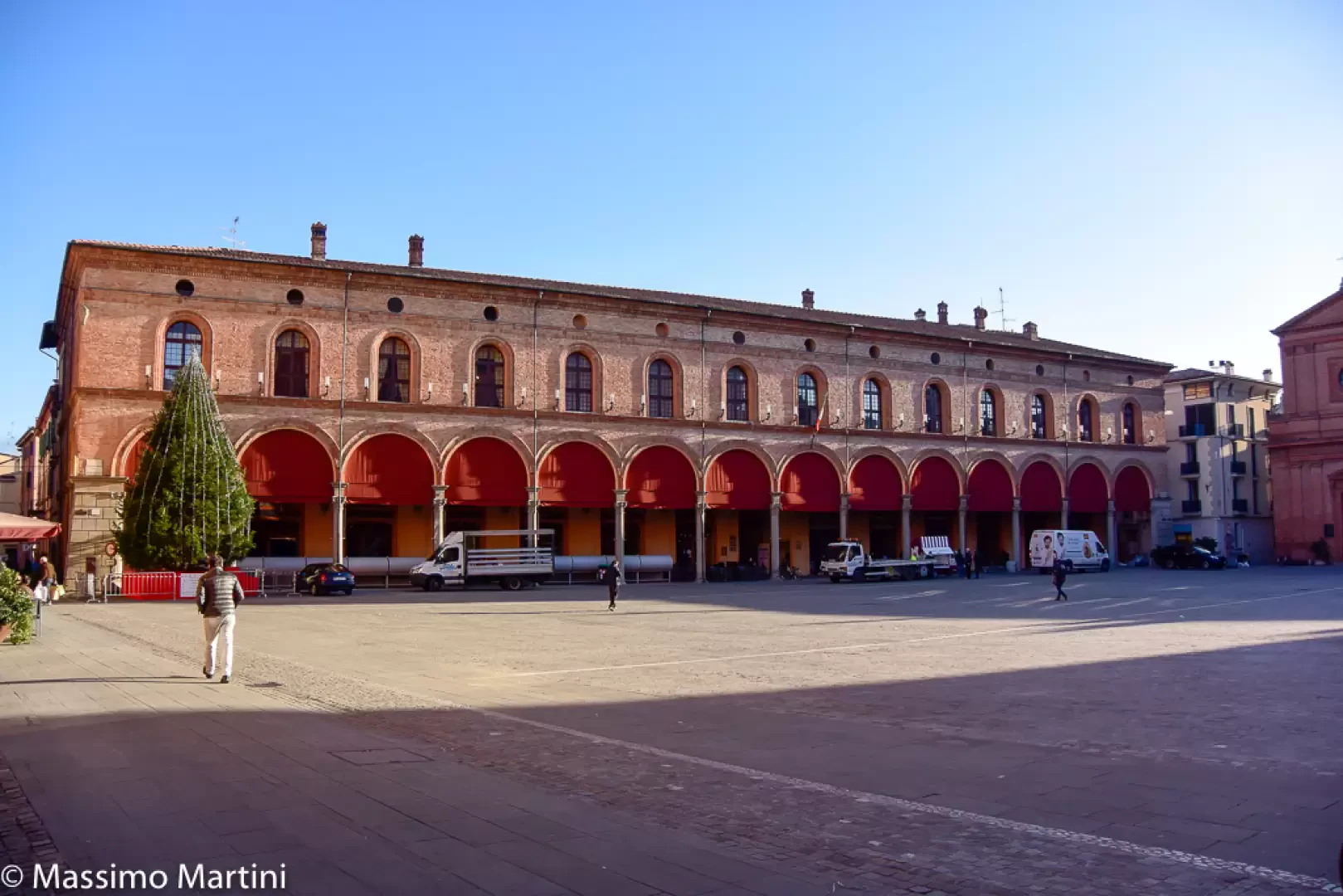
Imola stretches between the fertile Po Valley and the soft hills that prelude the Apennines. The territory is characterised by cultivated fields, vineyards and small woods, with the Santerno River marking the landscape. To the south, the hills offer panoramic views, while the historic centre retains a well-defined medieval and Renaissance layout, with porticoed streets and historic buildings.
Imola's roots go back to Roman times, but it was in the Middle Ages that it acquired strategic importance, becoming a free commune and then a seignory under the Manfredi family. During the Renaissance, the city was embellished with architecture such as the Rocca Sforzesca, a military fortress transformed into a noble residence. Illustrious personalities include the condottiere Girolamo Riario, lord of Imola, and the famous cook Pellegrino Artusi, author of La scienza in cucina e l'arte di mangiar bene.
Imola's economy is dynamic and diversified: agriculture produces DOC wines such as Sangiovese, fruit and cereals, while industry is active in the mechanical, ceramic and biomedical sectors. Local handicrafts boast a tradition in the manufacture of terracotta and furniture. Tourism is driven by the Autodrome, home of the Formula 1 Grand Prix, and by the numerous cultural and gastronomic events.
Imolese culture is expressed through festivals such as the Festa del Perdono (ancient religious celebration) and the Fiera di San Cassiano, the city's patron saint. The cuisine is typical of Emilia, with dishes such as tagliatelle al ragù, passatelli in brodo and piadina. Among the curiosities, the legend of the Ponte del Bugno stands out, linked to an ancient popular mystery.
For hiking enthusiasts, the surrounding area offers routes through the hills, such as those of the Tozzoni Park and the Vena del Gesso Romagnola, ideal for trekking and cycling. The historical centre, with its museums (including the San Domenico Museum) and churches, is perfect for cultural visits.
Information
Area: 204.96 km²
Altitude:47m
Maximum elevation: 480m - Monte Castellaccio
Number of inhabitants:69,350 as of 31.12.24
Name in dialect: Jômla
Name in dialect: Imolesians
Patron Saint:St. Cassiano, celebrated on 13 August
Bordering municipalities: Argenta, Bagnara di Romagna, Borgo Tossignano, Casalfiumanese, Castel Bolognese, Castel Guelfo di Bologna, Conselice, Dozza, Massa Lombarda, Medicina, Mordano, Riolo Terme, Solarolo
Website: www.comune.imola.bo.it