Chapel of Visey-Dessous

Edited by:
Massimo Martini
Introduction
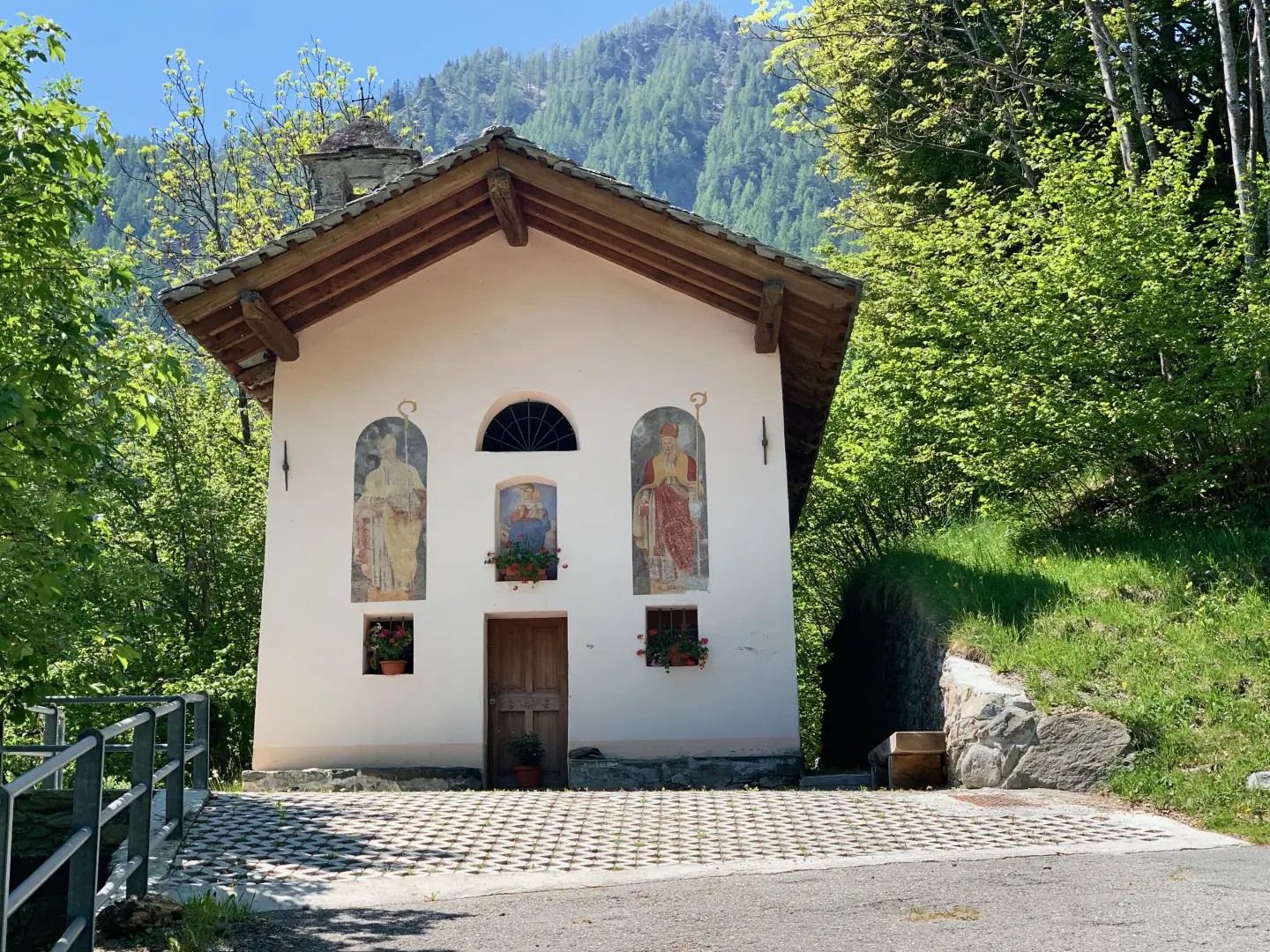
In a picturesque location in the surroundings of Issogne, a village known for its famous Challant Castle, stands the Chapel of Visey-Dessous, dedicated to Our Lady of the Snow. Founded in 1681 by Pierre Allemand, this chapel is set in a rural and devotional context, becoming a cultural and spiritual reference point for the local community. Devotion to Our Lady of the Snows finds particular relevance in the celebration of the patronal feast, which animates the community with traditional rituals and popular events.
Description
The chapel, despite its architectural simplicity, holds a strong symbolic charge. Built in the 17th century, it represents the will and faith of the faithful of the time, embodied through the founding figure of Pierre Allemand. Inside, the element of greatest devotion is a gilded statue of Our Lady, probably dating back to the same period as the foundation, and therefore charged with historical and spiritual value. Every year, on the Sunday closest to 5 August, the feast of Our Lady of the Snows is celebrated with a procession starting from Pianfey and ending at the chapel. This is followed by the celebration of mass, the offering and distribution of blessed bread, and an auction of products offered by the faithful: rituals that keep alive the link between the sacred and the social in this Alpine community.
Issogne is a small town in the Aosta Valley, where history is intertwined with the landscape and local traditions. The village's fame is linked above all to its splendid Renaissance castle, but the presence of rural chapels such as that of Visey-Dessous represents another qualifying dimension of the area: popular devotion, community rituals and the relationship between the sacred and daily life. This chapel plays an emblematic role in the collective memory of the valley: it testifies to the rootedness of devotion in community life, the continuity of traditions and the sacredness attributed to simple, peripheral places. The gilded statue of the Madonna, the liturgical acts and the procession manifest a cultural identity that is still alive, linking the present to the history of a deeply religious community.
The chapel is located outside the urban core, in a hamlet called Visey-Dessous. The procession that reaches it starts from Pianfey, involving a footpath through the surrounding hills, probably along the old mule tracks that joined the villages, thus maintaining the link with the traditional paths of the place.