Aiguille du Tour

Edited by:
Massimo Martini
Introduction
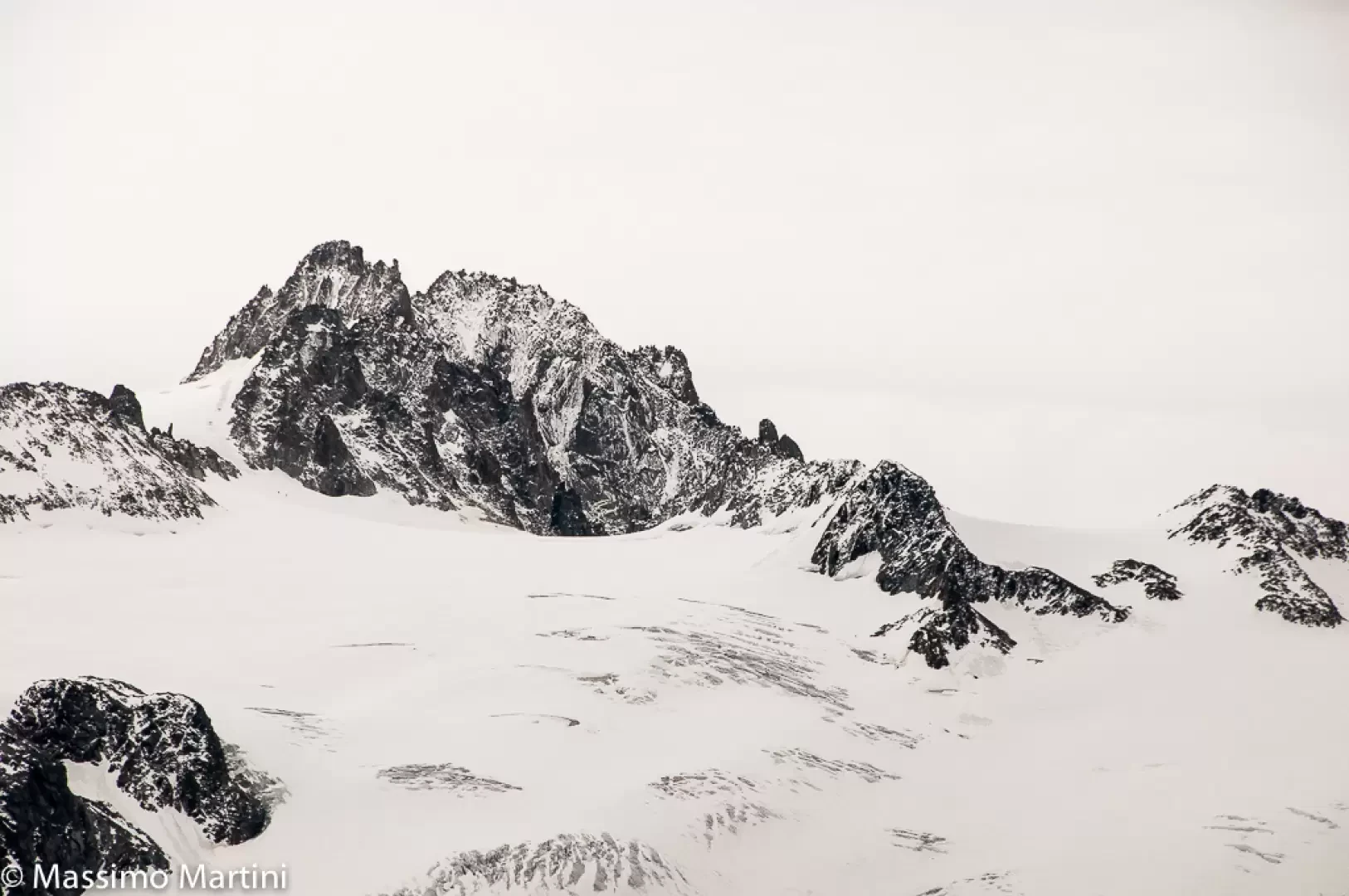
The Aiguille du Tour (3,540 m) stands on the border between Haute Savoie, France, and the Canton Valais, Switzerland, belonging to the northern sector of the Mont Blanc Massif, in the Chardonnet-Tour group. Characterised by its sleek shapes and an ensemble of rocky spires, it dominates the Glacier du Tour and is one of the classic destinations for first approaches to glacier mountaineering. The French side offers a sweeping view of the Chamonix and Trient valleys, while the Swiss side opens up to the Orsières basin and the Trient Basin.
Description
The first documented ascent dates back to 28 August 1926 by Tom Gills, Jean Ravanel and Joseph Couttet, probably via the south-east ridge, which is still the normal and most frequented route today. The Aiguille du Tour has seen successive expeditions over the years, including the first winter ascents, and the development of alternative routes such as the Table Couloir route, appreciated for its exposure and moderate difficulty. Conditions on the mountain vary according to the season, with soft snowfields in hot periods and the risk of crevasses accentuated in the height of summer. The surrounding area is rich in glacial environments, with a predominantly granitic substratum and flora adapted to high altitudes.
The origin of the place name comes from the nearby village of Le Tour, the starting point for ascents from the French side, while the mountain is mentioned in a number of local legends, often linked to the passage of guides and pioneers of the massif in the late 19th and early 20th centuries. The mountaineering tradition of the region is testified by the activity of the historical Compagnie des Guides de Chamonix and the intense use of the itineraries around Glacier du Tour. In Alpine art and literature, the peak is mentioned as a symbol of the beginnings of mountaineering on ice in a glacial environment.
The main ascent routes include:
- French Normal Route (PD): from the south-eastern variant, on snowy slopes and easy rock, a route frequently used by hikers and aspiring mountaineers.
- Table Couloir (AD): mountaineering itinerary that tackles a snowy gully and a rocky ridge, particularly impressive in well-established snow conditions.
The support points include the Refuge Albert Premier (2,705 m, reception and refreshment in the summer months), from which the base of the mountain can be reached in about 2 hours, and the Refuge de Trient on the Swiss side. From both huts, it is possible to plan traverses to nearby peaks, such as the Aiguille Purtscheller and the Aiguille du Chardonnet. The itinerary is on a glacier: crampons, ice axe and harness are indispensable, as well as an organised team that is aware of the risks typical of the glacial environment.
Curiosity: the Aiguille du Tour is easily recognisable due to its shape and relative ease of access compared to other peaks in the massif, making it a favourite destination for mountaineering courses. Observation of the Aiguille du Tour glacier allows an understanding of Alpine glacial dynamics and their impact on the surrounding landscape.
Information
Quota: 3,544m
Alternative name: -
Mountain group: Mont Blanc Massif
First ascent: 18/07/1926
First ascenders: M. Dreyfus, R. Duval, P. Henry and M. Ichac
First ascents in winter:
First ascents in winter: