Saint-Marcel

Edited by:
Maurizio Bergamini
Introduction
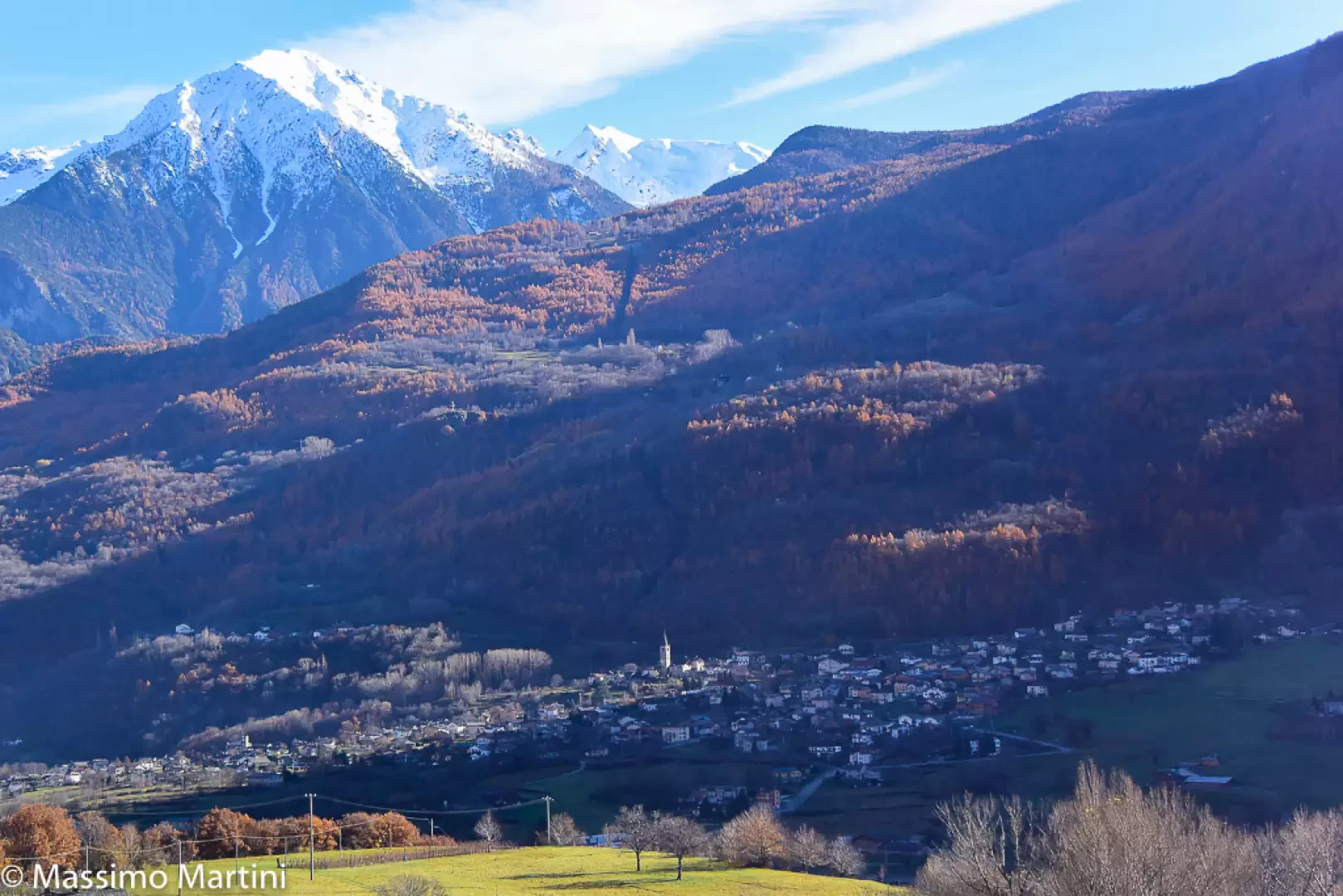
A valley bottom municipality, located on the orographic right of the Dora Baltea about 15 kilometres east of Aosta. It is located on the dejection cone of the stream of the same name, which descends from a valley of the same name. It is an impervious valley, a private nature reserve.Description
The microclimate of the village is not among the most inviting: it has little sunshine in the winter months and is constantly buffeted by the wind. However, this has not prevented the Autonomous Region from setting up the Agricultural Demonstration Centre and the Beekeeping Consortium, where state-of-the-art agricultural techniques are being experimented and quality beekeeping is being developed.
Traces of human settlements from prehistoric times testify to the importance of the area, which is not equally supported by Roman and medieval documents. The 'Castle', the main legacy of the feudal era (15th century) lies in a state of abandonment. On the other hand, the municipality's subsoil, rich in minerals, particularly a valuable quality of manganese, has been of considerable interest. Mining activity certainly continued for centuries (if not for millennia, since some claim that the Salassi and later the Romans already practised it) before finally ceasing in 1957. The ruins of the mining infrastructure are now easily accessible and are a destination for short hikes.
Finally, the presence of the Plout sanctuary in the upper part of the municipality is worth mentioning. It has been one of the most important places of Marian pilgrimage in Valle d'Aosta since the mid-17th century.
A valley bottom municipality, located on the orographic right of the Dora Baltea about fifteen kilometres east of Aosta. It is located on the dejection cone of the stream of the same name, which descends from a valley of the same name. It is an impervious valley, a private nature reserve. The microclimate of the village is not one of the most inviting: it has little sunshine in the winter months and is constantly buffeted by the wind. However, this has not prevented the Autonomous Region from installing the Agricultural Demonstration Centre and the Beekeeping Consortium, where state-of-the-art agricultural techniques are being experimented and quality beekeeping is being developed. Traces of human settlements from prehistoric times testify to the importance of the area, which is not equally supported by Roman and medieval documents. The 'Castle', the main legacy of the feudal era (15th century) lies in a state of abandonment. On the other hand, the municipality's subsoil, rich in minerals, particularly a valuable quality of manganese, has been of considerable interest. Mining activity certainly continued for centuries (if not for millennia, since some claim that the Salassi and later the Romans already practised it) before finally ceasing in 1957. The ruins of the mining infrastructure are now easily accessible and are a destination for short excursions. Finally, the presence of the Plout sanctuary in the upper part of the municipality is worth mentioning. It has been one of the most important places of Marian pilgrimage in the Aosta Valley since the mid-17th century.
Information
Area:
Altitude: 508m
Maximum elevation:
Number of inhabitants: 1227
Name in dialect:
Inhabitants' name:
Patron Saint:
Internet Site:
Webcam:
Bordering Municipalities:
Villages and Hamlets:
Landscapes: